Right now, somewhere on a motorway, a reefer unit is working harder than it has all year. It’s the height of summer. Ambient temperatures are putting refrigeration systems under maximum strain, and a single door-open event at the wrong moment could be the difference between a successful delivery and a rejected load.
This is the season when cold chain risk stops being theoretical. Every summer, food and pharmaceutical operators see the same pattern: temperature excursions increase, refrigeration units work harder, and loads are rejected. Not always because the product was compromised, but because nobody could prove it wasn’t.
And that’s the point worth paying attention to. In many cases, the product is perfectly fine. The problem is evidence.
The Gap Between “It Was Fine” and “We Can Prove It Was Fine”
Ask most transport, compliance or QA managers whether their temperature-sensitive goods remained within range last month, and you’ll likely get a confident “yes”.
Ask them to produce a clear, exportable record showing exactly that (with timestamps, thresholds, historical readings and any excursions clearly documented) and the confidence often starts to fade.
That gap matters more than many operators realise.
For food fleets, it’s the difference between confidently navigating an FSA or HACCP audit and scrambling to piece together logs after the fact. For pharmaceutical operators and carriers, Good Distribution Practice (GDP) doesn’t simply require temperature control, it requires documented proof that temperature control was maintained throughout the journey.
Customers and auditors aren’t asking: “Did you keep it cold?”
They’re asking: “Can you show me?”
Why Summer Is When This Really Bites
Cold chain compliance doesn’t change with the seasons. FSA, HACCP and GDP requirements apply just as much in July as they do in December. What changes is the margin for error.
Higher ambient temperatures mean reefer units work harder, door-open events carry greater risk, and small temperature deviations become much harder to ignore. It’s also when weak record keeping becomes most expensive.
A rejected load in August isn’t simply about wasted product. It can damage customer confidence, create difficult compliance conversations and raise questions about whether your operation can be trusted to handle temperature-sensitive cargo in the future.
What Good Cold Chain Records Actually Look Like
Strip away the compliance terminology and most cold chain requirements boil down to three simple principles:
1. Continuous Monitoring: A complete record of temperature throughout the journey, not just temperatures recorded at loading and delivery.
2. Immediate Visibility: Knowing the moment a threshold is breached, not discovering it hours later when a report is downloaded.
3. Proof on Demand: Records that can be exported and shared in minutes, rather than spending hours hunting through files, spreadsheets and historic data.
What does this look like in practice?
A connected cold chain operation brings the information that matters together, giving fleet and compliance teams a clearer picture of what is happening across the vehicle and its journey.
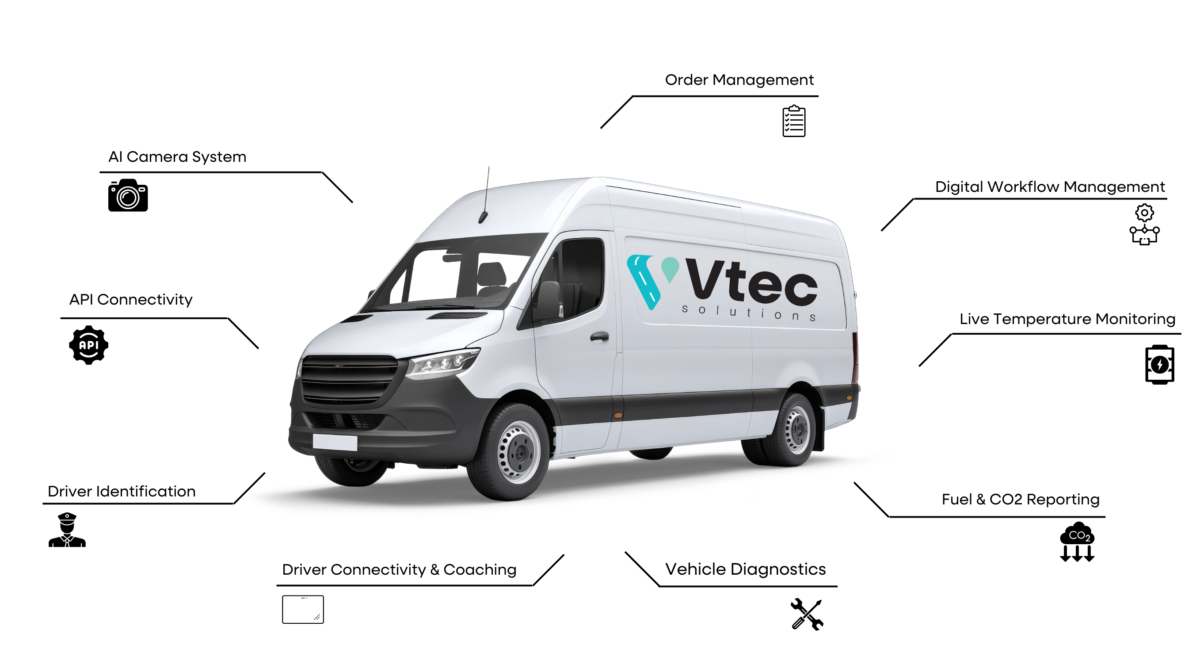
Most fleets already have thermographs capturing this information somewhere. The real question is whether that data is actually usable. Can it be accessed quickly when a customer asks for evidence? Can it be exported in a format that satisfies an auditor? Or is it trapped in a system that turns a simple request into an afternoon of admin?
Temperature Data Tells You What. Visual Evidence Tells You Why.
Temperature readings are incredibly valuable. They tell you what happened. What they don’t always tell you is why it happened.
If a temperature alert appears halfway through a journey, the questions start immediately:
- Was a door left open?
- Was cargo loaded correctly?
- Did freight shift and restrict airflow?
- Was the refrigeration unit operating properly?
- What happened immediately before the breach occurred?
This is where visual evidence becomes a powerful companion to temperature monitoring. A temperature graph may show a spike. An internal camera can show the door left open during unloading. A reading may show a deviation. Video footage can show exactly what was happening inside the vehicle at that moment.
When temperature data and visual evidence work together, investigations become faster, customer conversations become easier, and compliance records become much more complete. Most importantly, it turns assumptions into evidence.
The Bigger Picture: This Is a Trust Problem, Not Just a Compliance One
It’s easy to view cold chain record keeping as an audit requirement. In reality, it’s increasingly a trust requirement. The operators winning contracts today aren’t simply telling customers their processes work, they’re proving it. They’re able to provide evidence quickly, confidently and without disruption. They can demonstrate that products remained within specification, that procedures were followed and that any questions can be answered with facts, not assumptions.
That’s the shift worth making before the next audit, the next contract renewal or the next hot delivery run puts your records to the test.
Temperature-sensitive cargo doesn’t leave much room for guesswork. Neither should the evidence behind it.
Turning Records Into Proof
This is exactly the challenge Webfleet Cold Chain was designed to solve. By connecting with major thermographs already fitted to your fleet and pairing temperature data with camera-based evidence, operators can access the information they need without spending hours piecing together logs and reports.
The result is a clearer picture of what happened, why it happened and the evidence required to demonstrate compliance when it matters most. Because keeping your cool this summer means more than having a reefer unit that works.
It means having records that speak for themselves.
If you’re not confident your fleet could produce a clear, exportable compliance report today, it may be time to take a closer look at what modern cold chain visibility can deliver.
Want to see what better cold chain visibility could look like for your fleet?
Speak to our team about Webfleet Cold Chain and discover how connected temperature monitoring, vehicle data and camera evidence can help you prove compliance, protect deliveries and simplify fleet management.