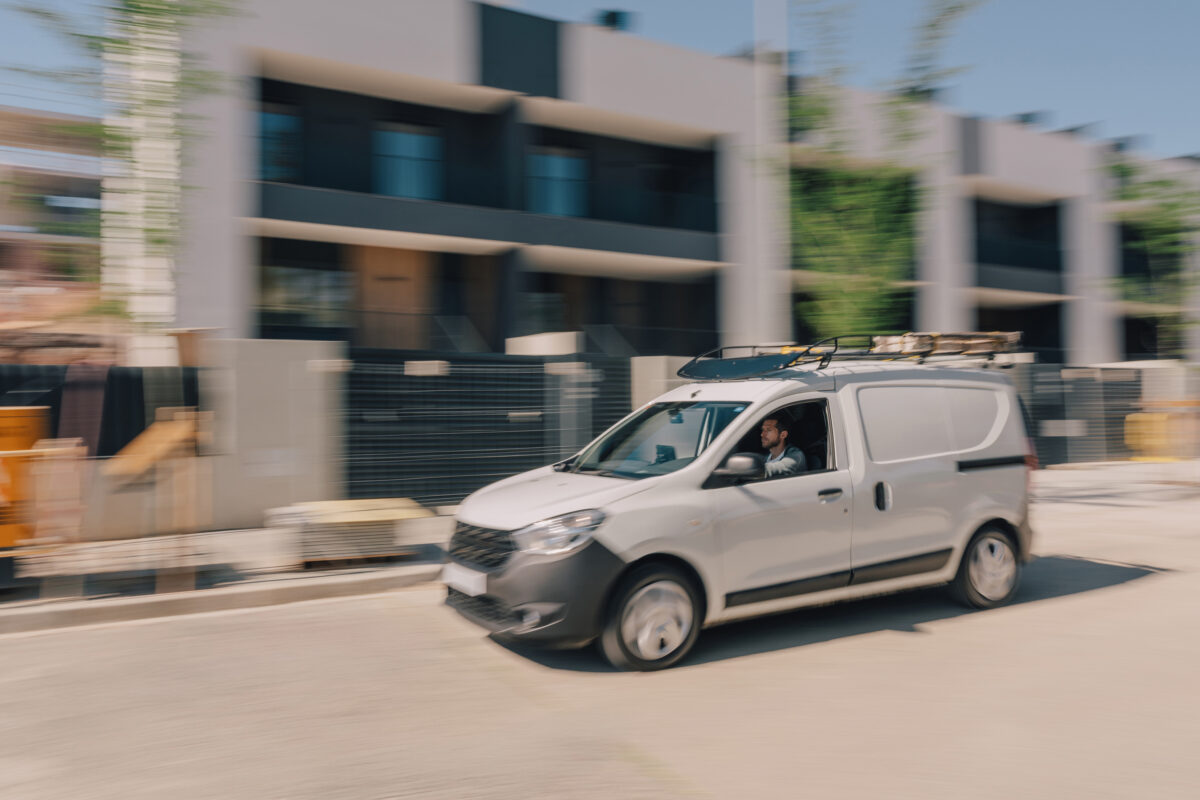
A dash cam pointing forward tells you what happened on the road. It tells you almost nothing about what happened on site, which is where most of the damage actually occurs.
Here’s a scenario that plays out regularly across construction fleets. A tipper returns from a delivery. There’s a scuff on the nearside. The driver doesn’t recall anything. A third party has made a claim. The fleet manager has a single forward-facing video, an insurance deadline, and no clear answer.
It’s not that the camera failed. It’s that it was pointed the wrong way.
Where Construction Risk Actually Concentrates
Construction vehicles don’t behave like typical fleet vehicles. A significant portion of their working time is spent stationary or manoeuvring on site, in close proximity to workers, plant, and the public. That’s precisely where single-camera setups have nothing to show.
Disputed damage claims, HSE investigations, and injury near-misses typically happen during reversing, loading, tipping, or site access. Not while cruising on a dual carriageway.
Without footage of those moments, fleet operators are left trying to reconstruct what happened from driver accounts, site logs, and whatever the third party is willing to say. That’s a slow, expensive, and often inconclusive process.
What Full-Vehicle Visibility Actually Gives You
A multi-camera setup treats the vehicle as a complete evidence platform rather than a forward-pointing recorder. Cameras covering the front, rear, both sides, cab interior, and load area mean that whatever happens, wherever it happens, there’s footage that captures it.
The practical difference this makes is significant. With time-synchronised video across all angles, fleet managers can reconstruct any incident in minutes rather than days. The footage exists. The context is there. The guesswork is gone.
- Disprove a damage claim before it reaches the insurer
- Verify PPE compliance and safe working practices during site operations
- Provide timestamped evidence of site access, delays, and service completion
- Review tipping and loading procedures after a reported near-miss
In each case, the value isn’t just in resolving the incident. It’s in how quickly you can resolve it, and what it costs to get there.
“Even when drivers do everything right, a fleet without footage often can’t prove it.”
What The Numbers Show
Fleets that have adopted multi-camera systems across their construction vehicles are reporting measurable improvements across the metrics that matter most:
It’s also worth considering the other side of the ledger. In construction, a single serious incident, involving a worker, a member of the public, or high-value plant, can run into six figures once you factor in legal costs, downtime, and reputational fallout. One prevented incident often pays for the system outright.
The Bottom Line
Construction fleets face a risk profile that road-facing dashcams were never designed to address. The exposure is real, the incidents are recurring, and the cost of not having evidence when you need it is quantifiable.
Multi-camera visibility doesn’t eliminate risk. But it puts fleet operators in control of what happens next with footage, context, and the ability to act quickly rather than scramble.
That’s the difference between managing incidents and being managed by them.
Vtec Solutions work with MANTIS to bring multi-camera visibility to construction fleets across the UK. Get in touch to find out what it could look like for yours.